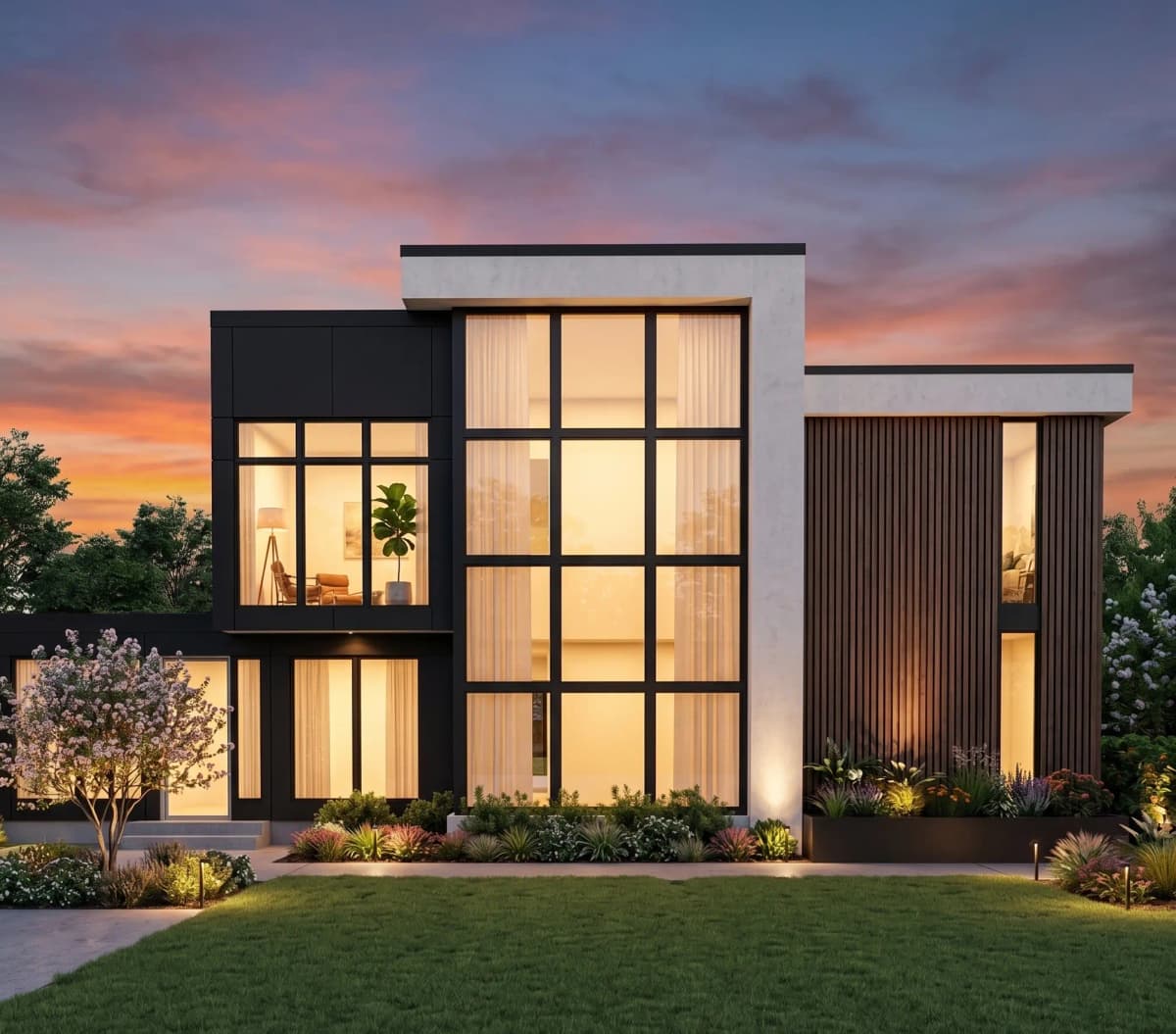
This home has been many things. Over more than a century in Kirkwood, it's been renovated, reconfigured, and reimagined multiple times. Each version left its mark on the structure. Walls were moved, rooms were added, systems were patched over systems. Every renovation left evidence in the framing: mismatched lumber, abandoned utility runs, walls that no longer aligned with their original purpose.
The question wasn't whether to renovate again. It was whether to start over entirely. A teardown would have been simpler. Clean slate, new foundation, conventional framing. But the existing foundation was sound. It had been standing for over a hundred years, and the cost and timeline of pouring a new one didn't justify abandoning what was already there.
So we made a different decision. Keep the foundation. Remove everything above it. Design a completely new home on top of a structure that predates modern building codes by decades. That constraint shaped every engineering and design choice that followed.
The structural challenge
Adding a full second story to a 100-year-old foundation creates a problem that most residential builders never encounter. The original structure was designed to carry a single-story load. The framing members, the bearing walls, the connection points between the foundation and the structure above: none of it was sized or positioned for the forces that a second floor introduces.
The conventional approach would be to reinforce the existing framing. Sister new members alongside old ones, add posts, and trust that the load paths resolve. We rejected that approach. Relying on century-old lumber to carry new loads introduces uncertainty that no amount of reinforcement fully resolves. Wood degrades. Connections loosen. Load paths through old framing are difficult to verify with confidence.
Instead, we designed a structural steel system that operates independently of the original wood framing. A network of steel beams and columns carries the entire weight of the second floor and roof, routing loads through new steel columns down to reinforced bearing points on the existing foundation. The original framing doesn't carry second-floor loads at all. It doesn't need to.
This approach is more expensive than conventional reinforcement. It's also more honest. The steel system is engineered with known capacities, known load paths, and known safety factors. There's no guessing about what a 100-year-old 2x8 can or can't carry.
 The structural steel system that supports the entire second floor, independent of the original 100-year-old framing.
The facade
The original exterior was removed entirely. In its place, we designed a facade that uses three primary materials: Alucobond aluminum composite panels, James Hardie stucco, and natural wood paneling.
Alucobond is a material more commonly seen in commercial architecture. It consists of two aluminum sheets bonded to a polyethylene core, producing panels that are flat, rigid, and weather-resistant with effectively no maintenance. On a residential project, the result is a precision that traditional siding can't match. Seams are tight. Surfaces stay flat. The material doesn't warp, rot, or need repainting.
The stucco sections use James Hardie fiber cement as a substrate, providing a textured contrast to the aluminum. Wood paneling introduces warmth at key points on the exterior, breaking up the harder materials and connecting the facade to the natural environment around it.
A 30-foot front window wall anchors the street-facing elevation. It's the defining feature of the home from the curb and serves a functional purpose beyond aesthetics: it floods the main living spaces with natural light from the south. The scale of the glass would not have been possible without the steel structure behind it. Traditional wood framing can't span 30 feet without intermediate supports that would break the glass into smaller, less impactful sections.
From the street, nothing about this home suggests what it was. That's the point.
Interior materials
Inside, the material palette is intentional and restrained. The goal was not variety. It was coherence.
White oak is the primary material. It runs across the floors, through the built-in cabinetry, and into the custom millwork throughout the home. White oak was selected for its grain character, its hardness, and its ability to age well over decades. It provides warmth and continuity across every room without competing with the architecture.
Countertops are Calacatta marble. Where a lot of residential construction defaults to engineered quartz for consistency, we chose natural stone for its movement and character. Each slab is unique. The veining introduces visual texture that contrasts with the clean lines of the cabinetry and the precision of the steel structure.
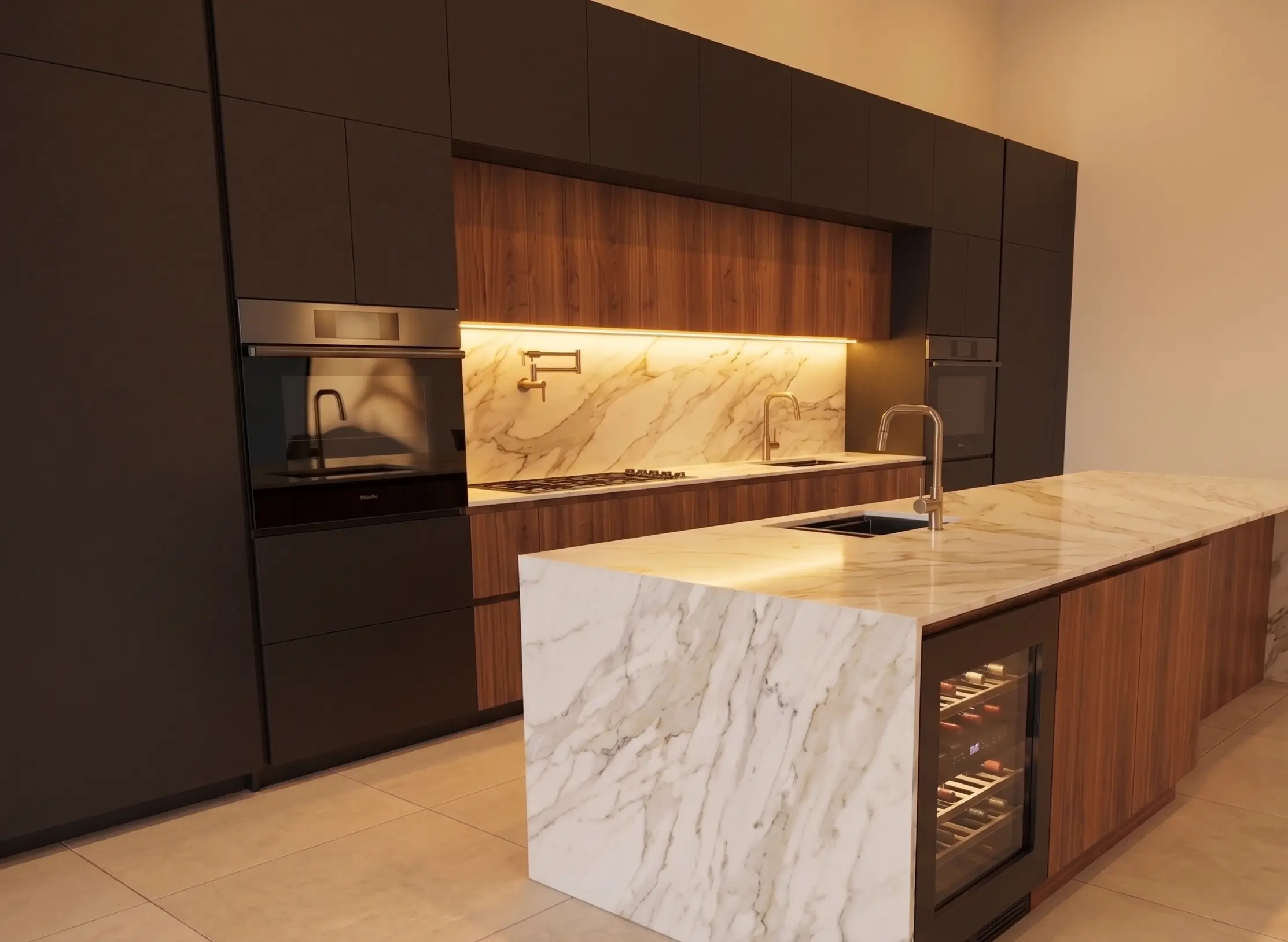
Every interior detail is custom. This isn't a renovation where builder-grade finishes are applied on top of an existing shell. The interior was designed from scratch to match the structural and exterior precision of the rest of the project.
Why renovation over new construction
Kirkwood is one of the most established neighborhoods in the St. Louis metro. Lot availability for new construction is limited, and the lots that do come available are often priced at a premium that reflects the neighborhood's desirability rather than the land's buildability.
The Harrison's existing foundation offered an additional strategic advantage. The original structure was built under setback requirements that have since been updated. Current zoning would require a new foundation to sit further from the property lines, reducing the buildable footprint. By preserving the original foundation, we were able to maintain the full footprint and deliver a larger home than a ground-up new build on the same lot would allow.
Acquiring an existing home with a viable foundation and reimagining it entirely is a different path to the same outcome. Every system is new: electrical, plumbing, HVAC, insulation, framing. The end result is indistinguishable from new construction, but the timeline, total project cost, and in this case the usable square footage can be more favorable than starting from scratch.
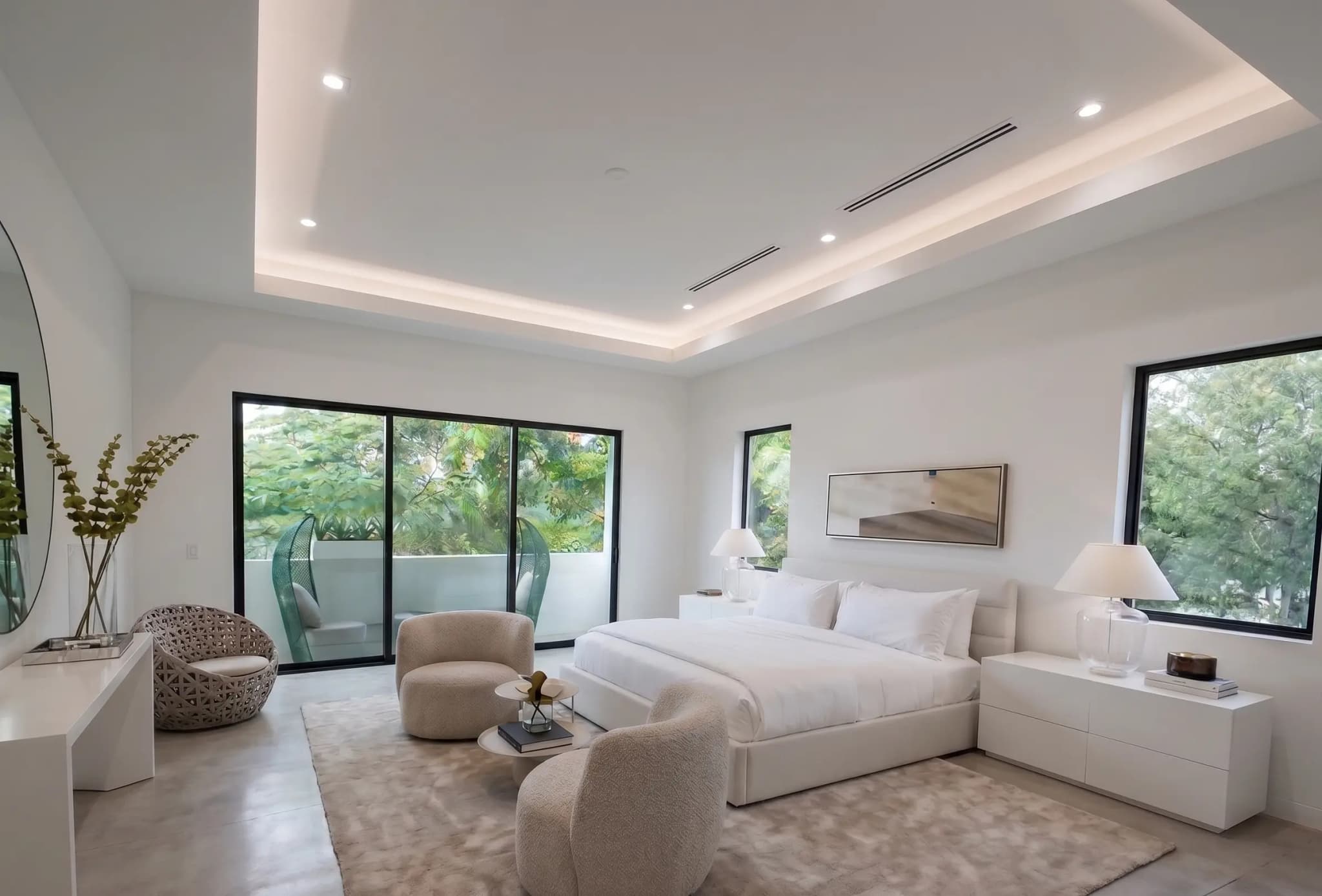
A project like this depends on understanding the regulatory and structural context of the property, not just how to build, but what's possible to build and where. That context informs every decision Klarhus makes as a Kirkwood home builder, before construction begins.
Renovating in Kirkwood?
We design and build whole-home renovations like The Harrison across the St. Louis metro.